Search This Blog

Wednesday, December 16, 2009

Beowulf and Honey

Where do I start?

When I was very tiny, back when I still thought that every language had its own alphabet (how could it be otherwise?), my favorite bedtime story was Beowulf. Sometimes my father read it to me in Old English. Sometimes he read it to me in modern English from the Norton anthology. Sometimes he retold it out of his head using small words and directing my attention back to the original words when there was a link. Beowulf was important.

A few years ago I happened to see Seamus Heaney's translation of Beowulf at Third Place Books and picked it up mainly for the pictures. Once I got into it, I was intrigued by Heaney's description of how he found his register - he brought up in his mind's eye (or ear) the sound of some of his father's relatives and used their voices to achieve what he calls "forthright delivery."

I know that's something I do. I shamelessly use friends and relatives to choose a register for translating dialogue. If I've ever talked to you, consider this fair warning.

In a similar vein, a while back I read an interview with a Russian screenwriter who admitted that he researched the speech patterns for the cops in one of his movies by watching hours and hours of amateur videos posted online by young cops. Hats off to him for that, of course.

But back to Beowulf. The hero's name is a cypher for "bear" (bee+wolf). Interestingly, the Russian word for bear - медведь - is also a cypher: "one who knows where to find honey." Several people have told me that there used to be another word for bear in Russian: бер (ber). For whatever reason, Russians preferred to call the bear by a nickname and the nickname eventually outlived the true name. You can see the older word in the name for a bear's cave: берлога (ber-LO-ga, or "bear-lying place").


Monday, December 14, 2009

Give me some salted cabbage, no sauerkraut!

I bought the December issue of Хлеб*Соль (Bread*Salt) because it advertised an interview with Valery Syutkin, whose music makes me feel happy and nostalgic. What's that tower of veggies on the cover? It's салат оливье (Olivier salad), the eternal "company's coming" dish made of finely diced potatoes, carrots, pickles, hard-boiled egg, green peas and the meat of your choice, all dressed with mayonnaise and lots of fresh herbs. That may not sound fantastic, but I've had iterations that were very tasty. My friend and mentor Alla Kornibad always added diced green apple. My mother-in-law dresses the salad with sour cream instead of the hated mayonnaise, which she claims is an urban abomination particular to Muscovites. All the wonderful advice I've received about rescuing Olivier from its many pitfalls is for naught - I won't be making it for New Year's or any other holiday.

I do, however, want to make квашенная капуста (salted cabbage). It's nothing like the sauerkraut I remember trying sparingly at church suppers and German-themed festivals in Texas. Russian salted cabbage contains nothing but finely sliced white cabbage, julienned carrots and salt (non-iodized). I've even got a special cabbage knife that produces paper-thin strings of cabbage. You put it all together in a big jar or pot, cover it, and poke holes in it every few days until it tastes done. It isn't really done, however, until you dress a bowl of it with unrefined sunflower oil and add fresh cranberries and chopped green onion. Then you're in heaven (if that's your kind of thing). There's a good article in this issue of Bread*Salt about salted cabbage. From it I learned the word крошиво (kroshivo) - salted cabbage made from the tough outer leaves of the head, plus rye flour.

Monday, December 7, 2009

Lentils - чечевица, сочевица, сочево


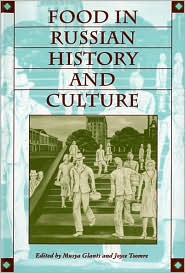
I'm still interested in how the word сочевица morphed into чечевица (lentils). One book I ran across while searching is "Food in Russian History and Culture" - I'll have to pick this one up next time I'm home. I love the cover picture of people carrying boxed cakes. The Google Books preview brought up an interesting passage about disagreement in the Orthodox Church on the proper recipe for kutya.


Monday, November 16, 2009

Gogol-Mogol and the "M" Trick

Some people like to have a гоголь-моголь (GO-gol MO-gol, a raw egg beaten with sugar) for breakfast, some people don't. I stay away from raw eggs but I'm very interested in the name of the drink. Repeating a word with an "m" instead of the first consonant is a funny little habit that you hear a lot when you talk with people from the Caucasus region. Think шашлык-машлык (barbecue-marbecue) or чай-май (tea-mea). It doesn't seem to mean anything in particular when people do the "m" trick; it just injects a feeling of relaxation into the conversation.

I usually hear Armenians do the чай-май thing on food words, but the other day a Russian relative who grew up in Tbilisi, Georgia was over for tea and he did the "m" trick on a word that had nothing to do with food. He was talking about construction materials and I sat up straight in my seat when he did it. I was too shy to pull out my notebook and write it down at the moment and now, of course, I've forgotten it - a fitting punishment.

Saturday, November 7, 2009

Mamalyga

At lunch today I put cornbread on the table. My father-in-law put on his glasses and exclaimed "It's mamalyga! Where did you find it?"

I told him it was from Trader Joe's.

Mamalyga is polenta. I believe the name mamalyga is used in lots of places from Hungary to Georgia. Here's a very appetizing picture of people eating mamalyga with delicious condiments in Abkhazia. Apparently the name comes from "melega," an old Italian word for corn (or sorghum, depending on where you look).

Sunday, November 1, 2009

POSBON, the whole story

I did find out what the name of the funeral home ПОСБОН stands for: Производственное объединение специализированного бытового обслуживания населения

Here comes the full translation: Production Group for Specialized Life Services for the Public

Life Services?

Быт (life) is a strange word in Russian. It means everyday life, as in slogging through. Small towns still tend to have a Дом Быта, a building full of small businesses that cater to those annoying tasks every human faces: taking your clothes to get dry-cleaned, buying a new extension cord, getting your picture taken for a passport application, buying the specific, hard-to-find brand of cat food your vet recommends, getting the sole glued back on your shoe, etc.

Now that I re-read the above paragraph, I think I prefer the funeral homes that advertise as Ритуальные Услуги (ritual services).

Thursday, October 29, 2009

Lahmajoun, and a mystery herb revealed

First off, the lahmajoun:


I know you can get lahmajoun in Moscow, but I only eat it in L.A. It's a paper-thin Armenian pizza sold in pairs, the sides with the toppings facing each other and a square of paper in between. You roll each one up and eat it with hot tea. Lahmajoun is supposed to be mildly spicy, but this particular lahmajoun stopped at being just savory. Still satisfying.

And now for the mystery herb:
[01/15/10 NOTE: this is actually summer savory, NOT oregano, which is what the saleslady called it!!]

My mother-in-law always chops up a bunch of this very pungent herb and puts it in potato salad or potato piroshki. She calls it citron and I always assumed it was some exotic Armenian herb you could only find at an Armenian grocery in Los Angeles. I've never seen it anywhere else in the U.S. and never at markets in Russia.

I saw some on sale at the store today, and since the place was otherwise empty I asked the saleslady what it was called in English. After a moment she remembered the name - oregano!

I took it home and compared the aroma to a good bottle of dried oregano. The dried oregano smells slightly sweet, like it's already on its way into a bottle of Italian seasoning. Aside from being much stronger, the fresh oregano has a hint of the smell you get when you touch a tomato plant. And it has none of the sweetness of the dried oregano.

My father-in-law remembers picking wild oregano in the hills when he was a boy, and he says the smell was enough to knock you down.

If you can get fresh oregano, try this potato salad:

Start with cooked, chopped potato (starchy, not waxy)
Add chopped bell pepper, halved kalamata or other purple olives, a good handful of chopped fresh oregano, a little bit of finely diced onion
Dress it with olive oil and lemon juice